

Disability retirement is: An employee benefit Intended for those employees who are unable to complete a normal career due to disease or injury Who meet the statutory, regulatory and/or administrative criteria FERS v. CSRS Retirement System Differences CSRS is being phased out but some employees are still in the system. The U.S. government maintains two retirement systems for its employeesthe Federal Employees Retirement System and the Civil Service Retirement System. Retirement systems are common at all levels of government. Employees, and often employers as well, contribute money to the employees retirement funds and retirees draw monthly income from the system. There are several significant differences between these two systems. CSRS Is No Longer an Option All federal workers had the option to convert from CSRS to FERS when FERS was first created in 1987. Now all federal employees are automatically enrolled in FERSthey don’t have the choice of electing CSRS instead. It is not to say that no federal employees have CSRS, however. CSRS is still available to federal workers who were in the CSRS system before 1987 and who chose to remain with CSRS instead of switching to FERS at that time. Their benefits were not terminated with the introduction of FERS. FERS is intended to fully succeed CSRS when the CSRS beneficiaries eventually die off. One Component vs. Three Components CSRS was established on January 1, 1920, and it’s a classic pension plan similar to those established during the same time period among labor unions and large companies. Employees contribute a certain percentage of their pay. When they retire, they receive an annuity sufficient to maintain a standard of living similar to what they experienced during their working years. Assuming the worker has at least 30 years in federal service, the CSRS benefit is generally sufficient to provide a comfortable lifestyle even without Social Security or any retirement savings. It’s indexed for inflation. A FERS employee has a smaller pension, one not intended to fully fund his retirement on its own. He also gets a thrift savings plan and Social Security to fund his retirement in addition to the pension program. The thrift savings plan is similar to a 401(k), so it’s possible that a FERS employee can come up short in retirement if she doesn’t handle the plan efficiently. But having the TSP gives FERS employees more control over and flexibility with their retirement plans. FERS workers typically retire with double the savings that CSRS workers accumulate, although CSRS employees do have superior pension benefits. Disability Benefits It’s generally accepted that the FERS plan has the edge here, at least for employees who have passed 18 months of service. Benefits are slightly greater, and, of course, CSRS employees are not generally entitled to Social Security disability because they don’t have sufficient Social Security credits. Survivor Benefits Survivors of CSRS employees are entitled to survivor benefits of 55% of the initial unreduced CSRS benefit. It drops to 50% for FERS survivors after a 10% reduction. FERS survivors would typically receive Social Security survivor benefits as well, however, and would presumably inherit the balance remaining in the thrift savings plans as well.
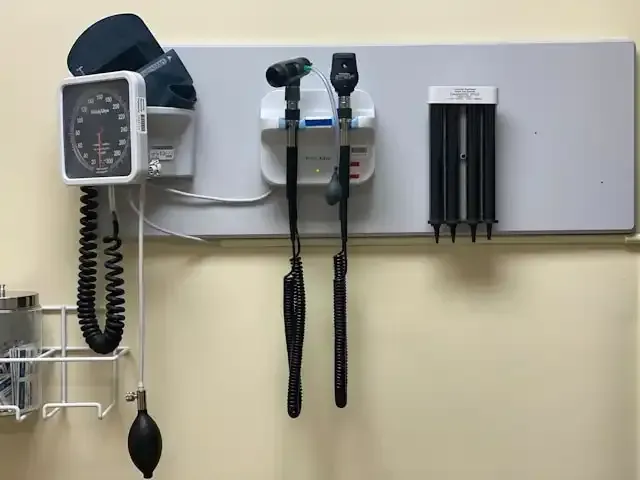
Applying for Social Security Disability can be a long and frustrating process. As part of that process, you may need to go through a consultative exam , which helps to establish the extent of your disability. What is a consultative exam, and what can you expect from that process? Make sure you are prepared by consulting with a member of our legal team.

If you are receiving Social Security Disability Insurance (SSDI) payments, it is likely that you have faced many challenges, and these may have directly affected your financial situation. Once financial hardship takes hold, it can be challenging to regain control, and you may have creditors expecting repayment. Some creditors may even use ugly tactics, one of which is the threat of garnishment.

It i s important for disabled entrepreneurs who receive Social Security Disability Insurance (SSDI) to understand how deducting impairment-related work expenses can affect SSDI calculations. These deductible expenses may reduce your countable earnings, helping you maintain eligibility for SSDI benefits while continuing to work.
Social Security Disability Insurance (SSDI) is a benefit you earn based on your work history and contributions to Social Security throughout your career. Supplemental Security Income (SSI) is a needs-based program for individuals with limited financial resources, whose work history is not necessarily a determining factor for eligibility.

If you are approaching retirement, you might be wondering how much you will receive in Social Security benefits. Your level of benefits will depend on how much you worked and earned in your career, calculated as average indexed monthly earnings (AIME).

Why Does the ALJ Want to Know That? ALJ wants to know The process can get confusing. We’re here to sort it out with you. To start with, let’s look at a common question we get: Why does the ALJ want to know that? Chores Pets Social activities Grocery shopping Who you live with Drugs/etc Why Did the ALJ Ask Me That? Some questions in your Social Security disability judge make sense. They will often ask about your previous work, your physical limitations, and why you feel you cant work. But your attorney and the judge will ask other questions about your personal life, such as your social activities and the chores you do around the house. Why do they ask that? The short answer is that the judge does not have current, full-time job performance to evaluate. He or she often determine whether you can perform a job using other clues about your abilities from your life. Here are a few examples. Household Chores The household tasks you can and cant do may be very informative for a Social Security judge. If you tell the judge you cant stand for long periods, but that you have no problem vacuuming the house, the judge may see that as evidence that you are more able. Pets You may no think that having a pet makes a big difference to your disability claim. However, if your attorney asks you about it theres a good reason. You may be able to let your dog out, but not be able to take her for a walk. You may be able to feed your cat, but not clean a litter box. These can illustrate your condition better than you think. Living Arrangements Do you live with a partner who assists you? Or maybe you have children or elders living with you that you
Many employers offer benefits in addition to wages. Besides health, dental, life, and accident insurance, some employers also offer short-term and long-term disability insurance . This insurance is designed to replace some of your regular income in the event you become unable to continue performing your job due to health reasons. Short-term disability insurance is designed to replace your income in the short term usually around six months. Long-term disability insurance is designed to replace your income over the long term. Ideally, it will pay benefits until you reach your retirement age.
Through the difficult times that have been brought upon us, we have experienced a handful of questions. With unclear directions, we are often forced to seek out more information. Especially on our own about how our individual lives will be impacted through these changes. Thankfully, you have a trusted Kansa s City federal disability law firm to help you navigate through these tough times. Through this article we are going to explain FFCRA. That is Families First Corona Response Act, and how it impacts your ability to obtain your disability benefits. Explore this information through the article with a disability law firm in Kansas City and short term disability. FFCRA is an intricate program that poses many questions. This act is implemented into businesses who have less than 500 employees. The main point of this act is requiring employers to provide more leave. Up to eighty hours of paid sick leave for an employee who is unable to perform their work. How Can We Help? As a disability attorney in Kansas City , we want to examine how this act effects those who will need to claim short-term disability benefits. In short, you will still have the ability to claim these benefits however there are more steps to take. For short-term disability benefits to be obtained, the employee must have a complete loss or decrease of income. If the employer is still paying the employee as they would under the FFCRA, there is no loss of income and the employee will not qualify for short-term disability until there is loss of income. Basically, this act implements a plan of payment for employees who do not always receive short-term disability benefits. It is one or the other. Our office is equipped with some of the most trusted disability lawyers in Kansas City and we are prepared to help you through these difficult times. BurnettDriskill Attorneys, one of the most well known in Kansas City disability law , wants to get you the results you deserve, even through these difficult and trying times. If you believe you could benefit from the use of a disability law firm in Kansas City , give us a call today to talk about the best options for you and your family.
COVID-19 has thrown a wrench in our way of life. Not only has it affected our personal and business lives, but it has also changed the way that medical professionals work. Many visits are now done via telemedicine and telehealth, either through video or phone call. Although this is safer and more convenient, it presents some challenges in disability claims.
